
Alt Text: types of charity donations methods cash goods securities volunteer
When you think about charitable giving, cash donations probably come to mind first. But modern philanthropy offers numerous ways to support causes you care about, each with unique benefits, tax implications, and impacts. Understanding different types of charity donations helps you choose methods that align with your financial situation, philanthropic goals, and desire for transparency and impact.
According to Giving USA’s latest report, American charitable giving topped $557 billion in 2024, with contributions spanning traditional cash gifts, appreciated securities, real estate, planned giving arrangements, and innovative approaches like product-based donations. Each giving method serves different donor needs and organizational requirements, and the most effective philanthropists often employ multiple strategies throughout their giving journey.
This comprehensive guide explores the full spectrum of charitable donation types, helping you discover giving methods that maximize both your impact and satisfaction as a donor.
Cash Donations: The Traditional Foundation
Cash remains the most common and straightforward charitable giving method, accounting for approximately 70% of all individual charitable contributions.
One-Time Cash Gifts
Single donations via check, credit card, or electronic transfer offer ultimate flexibility. You can give any amount at any time to any qualified charity without complex planning or paperwork. Cash donations are easy to document for tax purposes and allow organizations to use funds where needs are greatest.
However, one-time gifts lack the predictability nonprofits need for long-term planning. Organizations can’t reliably budget around occasional donations, limiting their ability to commit to sustained programs.
Recurring Donations
Monthly or quarterly recurring gifts provide charities with predictable funding while making generosity manageable for donors. Contributing $50 monthly feels more achievable for many donors than writing a $600 annual check, yet delivers the same total impact.
Research from Network for Good shows that recurring donors give 42% more annually than one-time donors and have retention rates 4-5 times higher. Nonprofits particularly value recurring donations because they enable confident program planning and reduce fundraising costs.
Setting up recurring gifts is simple—most charities offer automated payment options through their websites. Just remember to review these commitments annually to ensure they still align with your priorities and budget.
Employer Matching Programs
Many companies match employee charitable contributions, doubling or tripling your impact at no additional cost to you. Yet the Chronicle of Philanthropy estimates that $4-7 billion in potential matching gifts goes unclaimed annually because employees don’t realize their employers offer matching or forget to submit required forms.
Check whether your employer offers matching programs, understand requirements and deadlines, and submit documentation promptly. Your $500 donation could become $1,000 or $1,500 of support for causes you care about.
Non-Cash Donations: Property and Goods
Beyond cash, donors can contribute tangible items organizations need or can convert to operational funding.
Clothing and Household Items
Donating gently used clothing, furniture, appliances, and household goods to organizations like Goodwill, Salvation Army, or local shelters provides usable items to people in need while potentially generating tax deductions for donors.
The IRS allows deductions for fair market value of donated items in good condition. However, accurately valuing used goods can be challenging. IRS Publication 561 provides guidance, and organizations like Goodwill publish valuation guides. Keep detailed records including item descriptions, condition assessments, and donation receipts.
Be honest about valuations—inflated deductions invite IRS scrutiny and potential penalties.
Food Donations
Food banks and pantries welcome donations of non-perishable food items. However, modern food security organizations often prefer financial contributions that allow them to purchase food wholesale at discounted rates (often 10-15 cents per pound) and select items matching their specific needs and dietary requirements of served populations.
If donating food, choose nutritious, non-perishable items with distant expiration dates. Avoid glass containers, expired products, or opened packages.
Vehicles
Car donation programs accept vehicles, boats, RVs, and even aircraft. Charities either use vehicles directly, sell them and use proceeds, or partner with vehicle donation services that handle logistics.
Vehicle donation tax deductions depend on how the charity uses your car. If they sell it, you can typically deduct the actual sale price. If they use it in their programs, you may be able to deduct fair market value. Organizations must provide Form 1098-C documenting the vehicle disposal and your allowable deduction.
Research vehicle donation programs carefully—some third-party processors keep substantial portions of proceeds, reducing the actual benefit to charity.
Product-Based Donations
A growing approach lets donors purchase specific items from charities’ wish lists rather than giving unrestricted cash. Instead of wondering whether your $100 donation buys office supplies or executive salaries, you select from real items the organization needs—laptops for job training programs, art supplies for youth centers, winter coats for homeless shelters, or books for community libraries.
TheDonorPlug.com exemplifies this transparent model. Charities create detailed wish lists of needed items, donors browse and purchase specific products, and everyone can track delivery to the organization. This eliminates the “black box” problem where donors wonder how their contributions are actually used.
Product-based giving particularly appeals to donors who value transparency, want to see tangible impact, and prefer shopping-like experiences over traditional donation forms. Organizations benefit by receiving exactly what they need rather than spending donated cash on purchasing and logistics.
Appreciated Assets: Tax-Smart Giving
Donating appreciated property offers significant tax advantages for those holding investments with unrealized gains.
Stocks and Securities
Contributing stocks, bonds, or mutual funds held longer than one year provides double tax benefits. You avoid capital gains tax on appreciation while deducting the full fair market value (subject to AGI limits).
Consider this example: You purchased stock for $10,000 now worth $40,000. Selling the stock triggers approximately $7,140 in capital gains tax (23.8% combined federal rate). You’d net $32,860 to donate. Alternatively, donating the stock directly avoids all capital gains tax and generates a $40,000 charitable deduction. You give $7,140 more to charity while receiving a larger tax deduction.
Most charities accept stock donations, though procedures vary. Some use brokerage accounts that allow direct electronic transfers, while others work with third-party services like RenewFund or FreeWill that facilitate stock donations.
Real Estate
Donating real property—houses, land, commercial buildings—can remove appreciated assets from your estate while generating substantial tax deductions. Real estate donations work best when the property has significant value, carries no mortgage or liens, and has clear marketable title.
Charities may use donated property for their missions (office space, program facilities), sell it and use proceeds, or hold it as investment property generating ongoing income.
Real estate donations require professional appraisals, specialized documentation (Form 8283), and often environmental assessments. Work with advisors experienced in charitable real estate transactions.
Business Interests
Owners of closely-held businesses, partnerships, or LLCs can donate business interests to charity. This complex giving method requires careful valuation and legal structuring but can provide significant tax benefits while transitioning business ownership.
Cryptocurrency
As digital currencies gain mainstream acceptance, charities increasingly accept cryptocurrency donations. Donating appreciated cryptocurrency offers similar benefits to donating appreciated securities—you avoid capital gains tax while deducting fair market value.
Organizations like The Giving Block specialize in facilitating cryptocurrency donations to nonprofits, handling technical aspects and compliance requirements.
Retirement Assets: Strategic Gifting
Retirement accounts offer unique charitable giving opportunities, especially for retirees and those engaged in estate planning.
Qualified Charitable Distributions (QCDs)
If you’re age 70½ or older with a traditional IRA, you can make Qualified Charitable Distributions directly from your IRA to qualified charities. QCDs count toward Required Minimum Distributions but aren’t included in taxable income—a benefit even for non-itemizers.
For 2025, you can make QCDs up to $105,000 annually. This strategy particularly benefits retirees who don’t need their full RMD for living expenses, want to reduce taxable income, and support charitable causes.
QCDs must go directly from your IRA to charity—you can’t receive the distribution first then donate it. Work with your IRA custodian to execute QCDs properly.
Beneficiary Designations
Naming charities as beneficiaries of retirement accounts (IRAs, 401(k)s) makes sense from both philanthropic and tax perspectives. Retirement assets carry significant tax burdens when left to heirs but pass to charities tax-free.
Many financial advisors suggest leaving taxable retirement assets to charity while leaving tax-advantaged assets (Roth IRAs, regular investment accounts) to heirs. This maximizes after-tax value for both beneficiaries.
Beneficiary designations are revocable and cost nothing to establish—simply complete forms with your account custodian.
Planned Giving: Legacy Donations

Alt Text: planned giving legacy donations estate planning charitable bequests
Planned giving arrangements integrate charitable intent into comprehensive estate and financial planning.
Bequests
Leaving charitable gifts through your will or trust represents the simplest planned giving method. You retain full use of assets during your lifetime while supporting causes you care about after death.
Bequests can be specific amounts, percentages of your estate, particular assets, or residual estates after other bequests are satisfied. You can modify bequests anytime by updating estate planning documents.
Charitable Remainder Trusts
Charitable remainder trusts (CRTs) provide income to you or other beneficiaries for a specified period, then distribute remaining assets to designated charities. CRTs offer immediate partial tax deductions, convert appreciated assets to income without immediate capital gains tax, provide reliable income streams, and reduce estate tax liability.
CRTs work best for substantial gifts (typically $500,000+) and require professional establishment and administration.
Charitable Lead Trusts
Charitable lead trusts operate opposite to CRTs—they provide income to charities for a specified period, then distribute remaining assets to your heirs. Lead trusts benefit estate planning by removing assets from your taxable estate while ultimately benefiting family members.
Charitable Gift Annuities
You transfer cash or appreciated assets to a charity in exchange for guaranteed fixed payments for life. Rates depend on your age—older donors receive higher payment rates. You receive immediate partial tax deductions, predictable income, and satisfaction of supporting causes you care about.
Volunteer Time and Professional Services
While you can’t deduct the value of your time or professional services, volunteering remains one of the most valuable contributions you can make.
Direct Volunteering
Contributing time and skills to charitable causes provides value often exceeding monetary donations. Nonprofits need volunteers for program delivery, administrative support, board governance, fundraising assistance, marketing and communications, and facility maintenance.
According to Independent Sector, the estimated value of volunteer time reached $33.49 per hour in 2024. While not tax-deductible, this valuation helps volunteers and organizations understand the significance of contributed time.
You can deduct unreimbursed out-of-pocket expenses directly connected with volunteering, including supplies purchased for the charity’s benefit, mileage at 14 cents per mile (2025 rate), uniforms required for volunteering (not suitable for general wear), and travel expenses for charitable purposes.
Pro Bono Professional Services
Lawyers, accountants, consultants, designers, and other professionals can donate specialized services nonprofits need but often can’t afford. While professional service value isn’t tax-deductible, many professionals find this giving method deeply fulfilling and aligned with their skills.
If you provide pro bono services, you can deduct out-of-pocket costs incurred while providing those services (supplies, travel, etc.), though not the value of your time.
Choosing the Right Donation Type for Your Situation
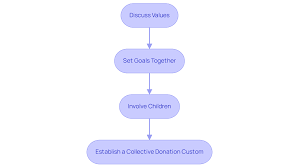
Alt Text: choosing charity donation type decision guide flowchart donor strategy
With so many giving options, how do you choose?
Consider Your Financial Situation
If you have appreciated assets (stocks, real estate, cryptocurrency), donating those provides maximum tax efficiency.
If you’re over 70½ with an IRA, QCDs offer unique benefits even if you don’t itemize deductions.
If you’re on a fixed budget, recurring monthly donations make generosity manageable while providing charities with reliable support.
If you’re in a high-income year, bunching donations and using appreciated securities maximize tax benefits.
Match Your Giving to Organizational Needs
Different giving types serve different organizational needs. Some charities need unrestricted cash for operational flexibility, while others need specific items like computers, food, clothing, or vehicles.
Ask organizations you support what types of contributions help them most. Many provide wish lists or needs assessments on their websites.
Product-based giving platforms like TheDonorPlug.com solve this matching problem by letting charities specify exactly what items they need and enabling donors to provide those specific items.
Align with Your Values Around Transparency
If seeing exactly how your contributions are used matters to you, consider product-based giving where you purchase specific items and track their delivery, supporting organizations with exceptional transparency, requesting detailed impact reports from charities, or using QCDs where funds go directly to charities.
Learn more about How to Choose Which Charity to Support based on transparency and other evaluation criteria.
Combining Multiple Donation Types
Sophisticated donors often employ multiple giving methods based on assets, timing, and organizational needs.
You might make recurring monthly cash donations for consistent support, donate appreciated securities at year-end for tax optimization, volunteer time and skills throughout the year, and include charitable bequests in your estate plan for legacy impact.
This diversified approach maximizes both your philanthropic impact and personal satisfaction while optimizing tax benefits across different financial situations.
In the end
Understanding different types of charity donations empowers you to give more strategically and generously. Whether you prefer traditional cash contributions, value the transparency of product-based giving, want to maximize tax benefits through appreciated assets, or plan to create a lasting legacy through estate gifts, multiple paths exist for supporting causes you care about.
The “best” donation type depends on your unique financial situation, philanthropic goals, and values around transparency and impact. Many donors discover that combining multiple giving methods throughout their philanthropic journey creates the most satisfying and effective approach.
Ready to explore giving options? Start by Learning How to Choose Which Charity to Support using criteria that matter to you. Understand Tax Benefits of Charitable Donations to maximize both social and financial returns. And if you’re considering organizing support for a cause you’re passionate about, check out our Guide on How to Start a Fundraiser.
You can also explore transparent giving through product-based platforms where you select specific items charities need and track their delivery, ensuring your generosity creates tangible, verifiable impact.
Whatever giving methods you choose, remember that the most important decision is simply to give. Your generosity—in whatever form it takes—supports vital work addressing real needs and creating positive change in the world.